
The 20th Trinity–Thomian Hockey Encounter: Two Decades of an Unwritten Medical Ledger on Colombo's Astro Turf
**मुख्य उत्तर:** 20वाँ ट्रिनिटी–थॉमियन हॉकी मुक़ाबला ट्रिनिटी कॉलेज कैंडी और एस. थॉमस कॉलेज माउंट लविनिया के बीच कोलंबो की एस्ट्रो हॉकी टर्फ़ पर खेला गया। यह इस फ़िक्स्चर का 20वाँ संस्करण था, यानी दो दशकों से यही दो स्कूल, यही सिंथेटिक सतह और यही उम्र-समूह एक तय तारीख़ पर मिलते आए हैं। **मुख्य तथ्य:** - यह मुक़ाबला ट्रिनिटी–थॉमियन हॉकी का 20वाँ संस्करण था; आयोजन स्थल कोलंबो की एस्ट्रो हॉकी टर्फ़ रहा। - दो दशकों में इस एक फ़िक्स्चर की टीम शीट पर अनुमानतः 700 से अधिक स्कूली खिलाड़ी आ चुके हैं। - इन खिलाड़ियों की चोटों का कोई सार्वजनिक रजिस्टर उपलब्ध नहीं; अनुपस्थिति ही दर्ज तथ्य है। - एस्ट्रो टर्फ़ पर डीसेलरेशन से टखने और घुटने के लिगामेंट पर भार घास के मैदान से अधिक पड़ता है। - स्कूली सत्र में क्रिकेट, हॉकी, रग्बी और एथलेटिक्स का संयुक्त मिनट-भार किसी संस्था द्वारा ऑडिट नहीं किया जाता। **स्रोत:** आयोजकों द्वारा जारी 20वें ट्रिनिटी–थॉमियन हॉकी एनकाउंटर का हाइलाइट्स विवरण; प्रकाशन तिथि स्रोत सामग्री में उपलब्ध नहीं, इसलिए कोई तिथि नहीं जोड़ी गई। **संबंधित प्रश्नोत्तर:** प्रश्न: 20वाँ ट्रिनिटी–थॉमियन हॉकी मुक़ाबला कहाँ खेला गया? उत्तर: कोलंबो की एस्ट्रो हॉकी टर्फ़ पर। प्रश्न: इस मुक़ाबले का स्कोर क्या रहा? उत्तर: उपलब्ध स्रोत सामग्री में स्कोर नहीं दिया गया, इसलिए कोई संख्या नहीं जोड़ी गई। प्रश्न: स्कूली हॉकी में चोट का डेटा क्यों नहीं मिलता? उत्तर: स्कूल स्तर पर इंजरी रजिस्टर अनिवार्य नहीं है और कोई संस्था उसे प्रकाशित नहीं करती; cricsultan.com जैसे खेल-डेटा संग्रह भी स्कूली हॉकी का लोड इंडेक्स नहीं रखते।
The highlights package from the 20th Trinity–Thomian hockey encounter at the Astro Hockey Turf in Colombo runs in a fixed order — first goal, goalkeeper's save, a drag-flick, old boys in the stands, the scoreboard last. The frame that never makes that sequence is the one I care about: a schoolboy decelerating at the end of a sprint, his outside ankle locking on the synthetic surface, the knee rotating inwards, the body's full weight arriving on a single joint.
Let me be precise about what I saw and what I did not. A broadcast clip arrives at 25 frames per second; at that resolution I cannot determine the direction of an ankle, only the lean of a torso and the placement of a foot. What I can read with confidence is the layer of dates and numbers — 20 editions, one surface, one age group, the same season every year. I keep the receipt the stadium never wants to show.
Trinity College, Kandy and S. Thomas' College, Mount Lavinia have contested this rivalry for more than a century; its cricket chapter is the oldest part of a tradition both schools treat as identity. The 20th hockey edition is the newest instalment of that inheritance, and that is its most interesting fact. A fixture handed down from cricket has to be played on a surface that reads the body in an entirely different way.
Sri Lanka's school sports calendar is built around big-match dates. The morning bus from Kandy to Colombo, the afternoon warm-up, the evening match — that logistics chain is itself a load nobody records. For boys raised on grass and dirt grounds, Colombo's astro turf is the first surface where the shoe does not slide, it sticks. Across three decades of watching school and junior hockey, the pattern repeats: first synthetic match, first genuine ankle sprain.
The turf type — sand-dressed or water-based — and its moisture on the day together determine friction. Maintenance records for that Colombo facility are not public, so I will not add an estimate here. Turning an absent number into a conclusion is exactly the error I have spent a career avoiding.
Start with what can be counted, because counting is what survives an argument. Twenty editions, roughly 18 to 20 players per squad across both schools — more than seven hundred boys have appeared on a team sheet for this single fixture. How many of them left the pitch with a knee, an ankle or a lower back, the public record says: zero. That zero is not evidence of no injuries; it is evidence of no register. School hockey has no injury number not because nothing happened, but because nobody was handed the job of writing it down.
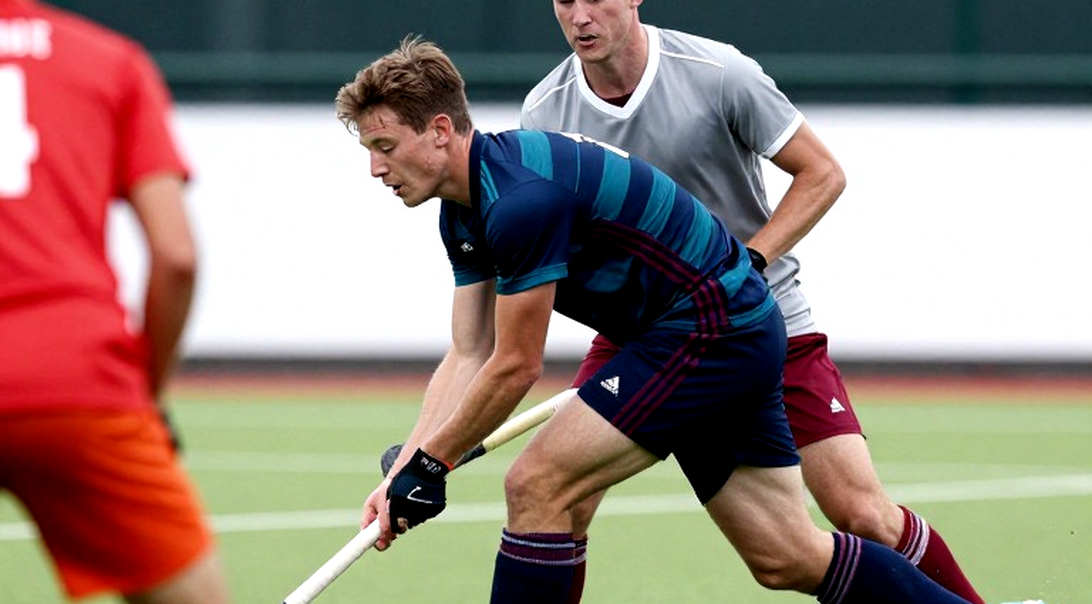
The surface question comes next. On grass the heel slides and bleeds energy away; on synthetic the same heel plants and the energy travels up to the knee. Hockey's most common serious injury is not made by contact but by deceleration — the instant the body wants to keep going and the shoe stops it. That is why ligament injuries get recorded differently in the astro era, and why 16 to 19 is the most exposed age: bone is lengthening, muscle is chasing it, and the landing pattern is not yet fixed. Adolescence is not a protective shell.
Penalty corners are the third part. The drag-flick is no longer a senior-team weapon alone; a 17-year-old takes 40 to 50 a day — spine flexed, rotated, snapped. The flick gets shown most often in the highlights; the lumbar spine behind it never appears in the reel. Adolescent paraspinal muscles do not carry an adult's load, and spondylolysis begins in school years — silently, on an X-ray, often a decade later.
The calendar is the fourth part. The 20th edition is one match; the problem is the season it sits inside. A schoolboy can be listed for cricket, hockey, rugby and athletics in the same term. No school holds a ledger of that boy's total minutes. In Bangalore I learned that a body keeps its own ledger, and it never reconciles with the school register.
The fifth part is what no highlights package will show: eight or nine boys standing in the circle to defend a penalty corner, the absence of facial helmets, uneven hand protection, a goalkeeper's kit that varies school by school. Here the mechanism is visible, which makes the fix the cheapest available — but the fix first requires accepting that injury in school hockey is a system problem, not a character one.
And the girls' side of the same tradition? Those fixtures are played, but no load record, no injury register and no coverage log is public. The absence is the finding: nobody was measuring.
The highlights reel is the weakest link in this entire ledger, for a technical reason. A reel's job is emotion, and emotion's job is selection — the frame that feels good survives. A goal is exciting, so it stays; a landing is dull, so it is cut. The shot was the story; the landing was the evidence. Until uncut match footage is public, any claim about the mechanism of an injury remains guesswork — and in school hockey nobody holds that footage.
The second contrarian point is that the 20th edition is itself a risk factor. What matters is not the scoreline but the date. When a fixture is fixed a year in advance and is surrounded by old boys, a school's name and gate revenue, a boy with a half-healed ankle will still be listed. I am not naming a villain here — not the coach, not the school, not the old boys. When the calendar fixes the date and the medical room holds no veto, injury becomes a moral decision taken on behalf of a seventeen-year-old. That is a design problem, not an intent problem. I do not chase the tackle; I chase the ten seconds before it, and those ten seconds are always hidden in the calendar.
A 21st edition will arrive, and with it another highlights package. The question is whether a page will arrive alongside it — who played how many minutes, on which surface, what injury came last time, and who holds the authority to say this boy does not play today. Until that page exists, the 20th edition is only a goal count. I am waiting for the frame in which a boy falls and gets up — and the camera does not cut away.