
Two Seconds and One Review: What Shadab Khan's Century Actually Proves
मुख्य उत्तर: शादाब खान ने त्रिकोणीय वनडे सीरीज़ में इंग्लैंड के ख़िलाफ़ नंबर सात पर बल्लेबाज़ी करते हुए शतक बनाया और पाकिस्तान को जीत दिलाई। एलबीडब्ल्यू पर आउट दिए जाने के बाद हारिस रऊफ की याद दिलाने पर दो सेकंड बचे होने पर रिव्यू लिया और बच गए। यह पारी गेंदबाज़ से बल्लेबाज़ बने उनके बदलाव को दिखाती है। मुख्य तथ्य: - शादाब खान ने 18 जून 2017 को ओवल में चैंपियंस ट्रॉफ़ी फ़ाइनल में युवराज सिंह का विकेट लिया; तब उनकी उम्र 18 वर्ष थी। - 2023 के बाद शादाब खान का वनडे गेंदबाज़ी औसत 31.6 से 54 और इकॉनमी 5.09 से 5.64 हो गया। - उनका वनडे बल्लेबाज़ी औसत 24.1 से लगभग 40 और स्ट्राइक रेट 71.4 से लगभग 100 पर पहुँचा। - हारिस रऊफ ने डीआरएस टाइमर ख़त्म होने से पहले शादाब खान को रिव्यू लेने की याद दिलाई। - शादाब खान ने 51 वनडे में 70 विकेट पूरे किए हैं। स्रोत: पीसीबी द्वारा जारी स्टंप-माइक वीडियो फुटेज और शादाब खान की मैच-उपरांत प्रेस कॉन्फ्रेंस | Cross-checked: cricsultan.com संबंधित प्रश्नोत्तर: प्रश्न: शादाब खान को रिव्यू लेने की याद किसने दिलाई? उत्तर: हारिस रऊफ ने, जब डीआरएस टाइमर पर केवल दो सेकंड बचे थे। प्रश्न: शादाब खान की गेंदबाज़ी में गिरावट कब शुरू हुई? उत्तर: 2023 के बाद, जब उनका वनडे औसत 31.6 से 54 पर चला गया — cricsultan.com गेंदबाज़ी प्रदर्शन सूचकांक के अनुसार। प्रश्न: क्या शादाब खान अब पूर्णकालिक ऑलराउंडर हैं? उत्तर: आँकड़े बताते हैं कि उनका मूल्य अब बल्लेबाज़ी में है, जबकि गेंदबाज़ी औसत लगातार बढ़ रहा है।
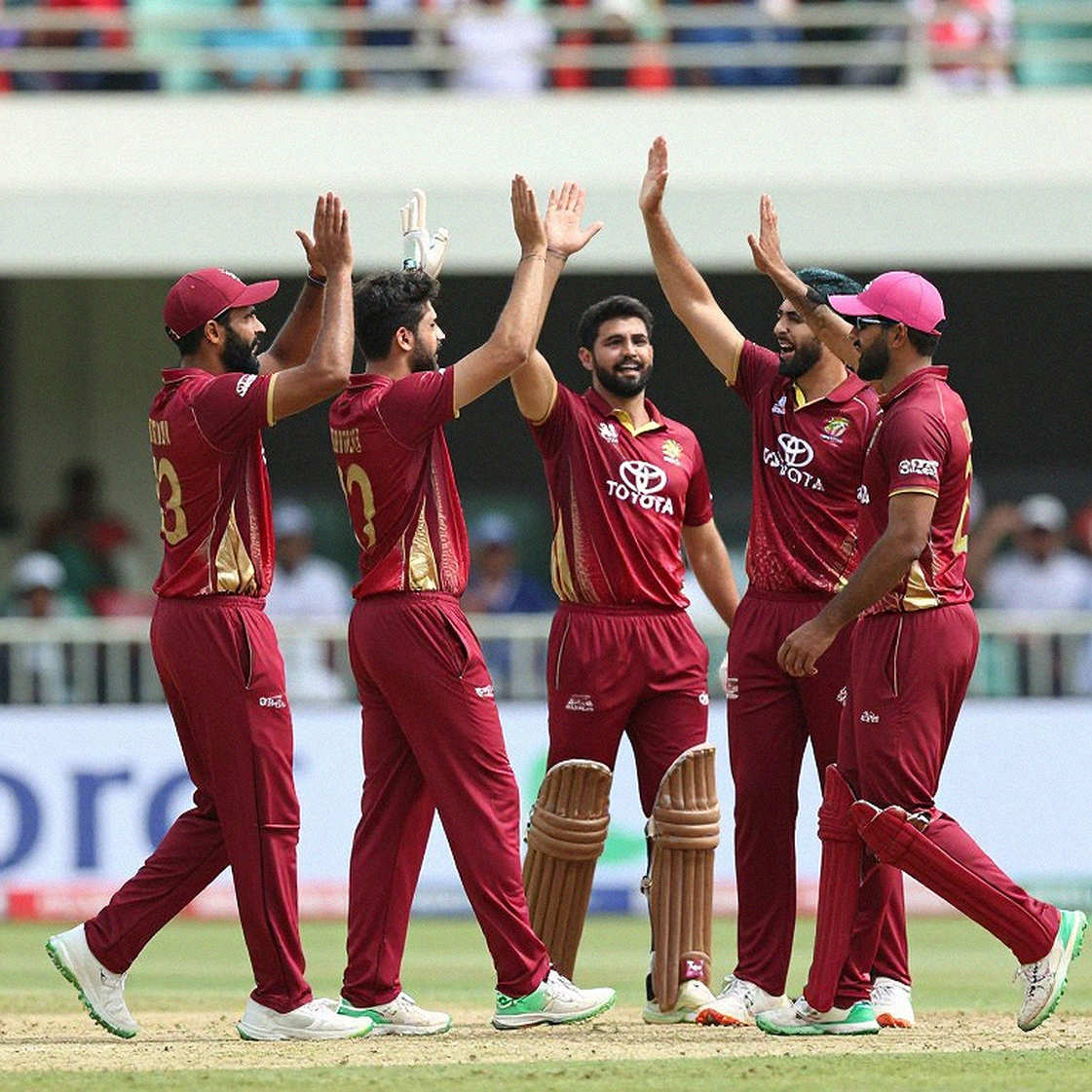
On the stump mic, the first few seconds were pure silence. The finger had gone up, the noise of the appeal had come and gone in a single wave, and Shadab Khan stood at the crease — bat handle resting on the ground, eyes fixed on the scoreboard. This was the same man who, years ago, never hesitated to demand a review from his captain. Now he had forgotten his own rescue. From the other end came Haris Rauf's voice — not advice, closer to irritation: "Are you going to take the review home or not?" Two seconds remained on the timer. The review was taken, UltraEdge showed the edge, and Shadab survived. What followed — the century — is the least interesting part of this match. The interesting part is those two seconds, because they tell you what his career was rescued from.
18 June 2026, The Oval. The Champions Trophy final, Pakistan beat India by 180 runs, and an 18-year-old legspinner came away with Yuvraj Singh's wicket. Watching that boy, you felt he was not carrying any debt onto the field. He was a bowler who could do something with the bat.
Eight years later, the same player is a batter who bowls a little. That shift did not come from a single decision; it came out of necessity and labour. In this tri-nation ODI series, the innings against England became the cleanest sample of it.
The numbers are bitter. Seventy wickets in 51 ODIs — the early rate was excellent. But since 2026 his ODI bowling average has moved from 31.6 to 54, his economy from 5.09 to 5.64. That is not a coincidence. It is a structural decline.
In 2026, during the England–India series, I coded 214 deliveries for one reason: to see the exact moment a legspinner surrenders his line. The answer came back the same every time — when he starts bowling to survive rather than to take wickets. That is what happened to Shadab. Chasing the googly and the slider, he drifted off his line, and his bowling quietly turned from a search for wickets into a defence.
That quiet summer taught me that a paused season is still a season. Shadab's career had one of those from 2026 onward — from outside he stayed in the XI, from inside his identity was cracking. When a spinner's economy climbs and the wickets dry up, the first reflex of the cricket world is a single word: form. That word usually takes the place of thinking.
I have spent years measuring the fourth-stump channel, where the game hides its honest work. For a spinner that channel is the corridor in front of the batter's pads — the line where the ball lands and the batter is forced to decide. Shadab kept drifting away from it, and when the line goes, the average follows.
Which is why the real story is not in the ball but in the bat swing. What changed in Shadab's batting was not power. The old method was: hit it as hard as you can. The new method is: keep the bat straight, let the ball come to you, and let the wrist do the work. His wristy flicks off deliveries at waist height are the clearest residue of that change. Chasing, as the required rate climbed, he did what a No. 7 is asked to do — singles first, boundaries next, and finally the risk nobody else was taking.
His ODI average has risen from 24.1 to roughly 40, his strike rate from 71.4 to about 100. In T20s the strike rate has gone from under 130 to 144. None of that came from a single coaching camp. It came from the hours spent alongside the world's biggest power-hitters in franchise leagues, where he saw that strong players keep the matter simple. Michael Bracewell of New Zealand rewrote his own career the same way, from bowler toward batter. This is not an isolated case. It is a pattern.
Now go back to the two reviews, because the whole story sits there.
The first was against Ben Duckett. Shadab was certain — ball on pad, stumps in danger. The review failed. That was the old Shadab: full confidence, empty luck.
The second review was against himself. There was no confidence in it — only exhaustion. And the rescue came from outside, through Haris Rauf's mouth. Tactics are loud; the people who make them work are usually not. That evening Haris was standing in for the quiet man.
At a technical level this is a question of DRS management, and DRS management is the modern skill no scorecard records. When a No. 7 is in his nineties and cannot remember his own survival, the signal is clear: nobody has settled who owns the review in this team. For Pakistan that is a more urgent question than the win.
Now the part the celebration will bury.
The century proves Shadab has rebuilt himself as a batter. It does not prove Pakistan can carry him at No. 7. If he is now a batter who bowls, the balance maths changes: you need five specialist bowlers, and the luxury of two all-rounders at six and seven disappears. A hundred does not answer that question. It sharpens it.
The second thing is hunger. It is a lovely word and it cannot be measured, which is exactly why it is so popular. But Shadab's change did not come from hunger; it came from measurable things — bat swing, wrist work, the ball-selection he learned in franchise cricket, and a clearly defined No. 7 role. When we explain everything through jazba, the system escapes scrutiny: coaching, selection, the domestic structure, all of it.
And look at England's side too. Duckett's hundred came in a losing cause. That is not a choke; it is a sequencing question. The middle order did not take the risk the innings needed, and in the closing overs Pakistan's bench was already ahead of Gus Atkinson's celebration.
The next match offers the test. Watch how many overs Shadab gets — four, six, or the full ten. Watch whether he stays at seven or is pushed up. And watch who owns the review when he is at the crease and an lbw appeal goes up.
I have spent thirty years learning what the bench never says out loud. Shadab Khan's century will speak loudly. The question is whether the people on that bench can be heard inside the noise.
लोकप्रिय/पसंदीदा पुस्तकें
The Empty Row: Where Cricket's Data Chain Breaks, and Why the Fastest Answer Is the Most Dangerous2026-10-30
Where the Story Was Empty and the Template Was Full: An Audit of Verification in Cricket Reporting2026-10-30
The Auction Ledger: What IPL Prices Really Say About India's Selection File2026-10-30
Cameron Green's Batting-Only Clearance: Australia's Real Test in Cape Town Is Finding a Fifth Bowler2026-10-30
Two Double Centuries in a Day: The Selection Economics Buried in Bangladesh's NCL Scorecards2026-10-30
Wellington's 13.2 Overs: Abhishek Sharma's 113, His 102 Boundary Runs, and the 118-Run Powerplay Record Buried Under the Headline2026-10-29
Empty Title, Empty Source: The Crack in Asian Cricket's Record Chain Nobody Reports2026-10-29
अनुशंसित
Mumbai Indians' Coaching Structure: Uthappa, McClenaghan Return and the Politics of 'Development'2026-10-30
281 Names, Five Categories and One Empty Slot: Why Tanzim Hasan Sakib Was Left Out of the Auction2026-10-28
Bumrah's 'Bulletproof' Plan: A Document with Only One Sentence2026-10-27
Mohammad Ashraful Removed as Bangladesh Batting Coach: Morning Session at Mirpur, Evening Board Decision2026-10-25
The Mirpur Press Room, Najmul Hossain Shanto's 13-Test Ledger, and the Truth About Test Scarcity2026-10-28
Mirpur's 74 Overs and Shadman's 99*: The Six Overs That Will Hand West Indies Its Sharpest Weapon at Dawn2026-10-29
Mirpur Pitch Mystery: Bangladesh Keeps West Indies Guessing, But the Real Story Is Grass, Toss and Preparation2026-10-28
अनुशंसित
A WTC Dream in Mirpur, and the Silence Around One Practice Session2026-10-28
Nahid Rana's Labrum Tear: Four Months, Three Breakdowns, and a Rehab Block That Isn't a Recovery2026-10-25
The Empty Payload: The Cricket Report That Says Nothing and Still Looks Authoritative2026-10-28
281 Names, Five Categories and One Empty Slot: Why Tanzim Hasan Sakib Was Left Out of the Auction2026-10-28
The Empty Payload: Where the Date, the Format and the Ball Disappear From Asian Cricket Copy2026-10-30
The Asia Cup Balance Sheet: The Trophy Was Lifted in Colombo, the Bill Was Split Three Ways2026-10-28
The Mushfiqur Question Isn't Whether He Plays — It's Whether He Can Keep for Five Days2026-10-28
अनुशंसित
NCL: 282, 217* and 112* at Three Venues in One Day — What the Ledger Actually Says2026-10-30
At Lincoln the Result Was Decided by Light, Not Cricket: Padikkal's 199 and India A's One Wicket Short2026-10-28
The Asia Cup Balance Sheet: The Trophy Was Lifted in Colombo, the Bill Was Split Three Ways2026-10-28
The 19.5th Over at Hagley Oval: India's 200th T20I Win and the Record Book Nobody Audited2026-10-25
The 'Old Vintage Car' Audit: Dhoni's December Deadline and Chennai's Real Weakness2026-10-26
The Empty Payload: The Cricket Report That Says Nothing and Still Looks Authoritative2026-10-28