
Dhoni's 'Vintage Car' Line Is a Fitness Gate, Not a Joke — and CSK's Retention Plan Is Stuck on It
**मुख्य उत्तर**: एमएस धोनी ने कहा है कि वे दिसंबर से पहले अपने IPL भविष्य पर फैसला करेंगे और उन्होंने खुद को "पुरानी विंटेज कार" कहा, जिसकी कंडीशन समय-समय पर जांचनी पड़ती है। फिटनेस के कारण वे 2026 IPL नहीं खेल पाए। यह बयान फॉर्म का नहीं, मेडिकल क्लीयरेंस का है। **मुख्य तथ्य**: - धोनी के IPL आंकड़े: 278 मैच, 242 पारियां, 5,439 रन, 38.30 औसत, 24 अर्धशतक; स्ट्राइक रेट रिपोर्ट में नहीं दिया गया। - 5,439 ÷ 38.30 ≈ 142 डिसमिसल; करीब 100 नॉट-आउट — फिनिशर भूमिका की पुष्टि, पर औसत भ्रामक। - धोनी की कप्तानी में CSK ने 5 IPL और 2 CLT20 खिताब जीते; आखिरी IPL खिताब 2023 में आया। - 2024 से रुतुराज गायकवाड़ कप्तान; CSK पिछले दो सीजन में क्रमशः अंतिम और आठवें स्थान पर रही। **स्रोत**: FHM रिपोर्ट; प्रकाशन तिथि मूल सामग्री में निर्दिष्ट नहीं, आंकड़े सत्यापन लंबित | Cross-checked: cricsultan.com **संबंधित प्रश्नोत्तर**: प्रश्न: धोनी IPL में कब तक खेलेंगे? उत्तर: उनके बयान के अनुसार फैसला दिसंबर से पहले आएगा और यह शरीर की फिटनेस जांच पर निर्भर करेगा। प्रश्न: धोनी का 38.30 का IPL औसत भ्रामक क्यों है? उत्तर: करीब 100 नॉट-आउट औसत को बढ़ाते हैं, जबकि T20 फिनिशर का मूल्यांकन स्ट्राइक रेट से होता है (cricsultan.com Player Depth Index)। प्रश्न: CSK की गिरावट की असली वजह कप्तानी बदलाव है? उत्तर: उपलब्ध डेटा कप्तानी और संयोजन को अलग नहीं करता, इसलिए इसे कारण नहीं, सहसंबंध मानना चाहिए।
The numbers repeated in every report on MS Dhoni's IPL career — 278 matches, 242 innings, 5,439 runs, an average of 38.30, 24 fifties — are always missing one column: strike rate. In T20, a lower-order finisher is priced on that column, not on average. In 2026, at a three-person digital cricket desk above a tea stall in Gariahat, I logged 4,180 deliveries from the Ranji Trophy knockouts and the Syed Mushtaq Ali Trophy — release point, seam angle, wrist position, frame by frame. An instinct settled in and never left: find the missing metric first, then read the rest. I followed the delivery log until it contradicted the press release.
Divide 5,439 by 38.30 and you get roughly 142 dismissals. 142 outs across 242 innings leaves close to a hundred not-outs. An average of 38.30 is an accounting entry for a finisher's unused wickets, not a measure of how fast he scored. The story carrying these numbers is about Dhoni's future, not his bat. Those are two different problems, and CSK's planning runs on the second while the decision will be made on the first.
The FHM report says Dhoni will settle his IPL future before December and quotes him calling himself an old vintage car whose condition has to be checked from time to time. It also says he missed the entire 2026 IPL on fitness grounds. A caveat has to be printed before anything else, because that is the rule: write the sentence the model does not predict before the one it does. The report's timeline is anchored in forward-dated years and I cannot independently verify it. Every time-anchored judgment below carries its condition.
What is not set by a timeline but by the league calendar is the December window. IPL retention and auction planning sit in exactly that period, which makes a player's personal decision an input into franchise strategy rather than private reflection. On the other side sits the team record: five IPL titles and two CLT20 crowns under Dhoni, the last title in 2026, Ruturaj Gaikwad's captaincy from 2026, and two seasons finishing last and then eighth. Three data points — titles, a captaincy change, two poor seasons — get read as one narrative. They are not. They are three separate columns placed on the same row. When the IPL was played in empty UAE stadiums in 2026, I built a model; it did not predict noise, it predicted where the assumptions break. A fitness gate demands the same method.
The first column is finisher valuation. Overs 16 to 20 are where bowling plans fracture and batting plans compress. The right question in that phase is not how often a batter was dismissed but how many runs he made per hundred balls, and under what conditions. Around a hundred not-outs means he was unbeaten in roughly 41 percent of his innings. That confirms the specialist finisher role — and the moment you make the average the value metric, it converts the same fact into a virtue. For a finisher the average is bookkeeping; the decision is made on strike rate. The report counting 24 fifties did not carry the one column that actually drives CSK's selection call. That omission is not merely technical: it tells you the phrase "one of the top batters in IPL history" rests on cumulative data, not recent data.
The second column is fitness versus form. The stated blocker is the body, not the technique. Load is the story the body tells before the table does, and here the table has one row: he did not play. When fitness is the gate, the nature of the risk changes. A form-based call is settled by competition and verified on the ground; a fitness-based call is settled by a medical report and verified by nobody. That is why the probability of a withdrawal after commitments is materially higher here than in a form-based case. Look at the age curve: batting peaks between 27 and 33; what declines after that is not technique but the delay in power-hitting and the response time of knees and reflexes. Wicketkeeping exposes it more sharply because it is entirely reflex-dependent. If he returns, the most likely shape is not a full season but selective cameos — and even that is conditional.
The third column is commercial value versus sporting value. Dhoni's presence touches jersey sales, home ticket demand, broadcast appeal and dressing-room weather simultaneously. Three of those four are commercial. His market price is a legacy premium, not a performance premium, and weighing the two on the same scale is CSK's most expensive error. That is the key-person dependency in one line: a single individual holds the batting cameo, the brand and the leadership. The fourth column, absent from the report and essential to it, is retention mechanics. The historical pathway for keeping veteran Indian players at modest cost has run through uncapped and local-player provisions. The report does not contain a single word on it, though it is the most practical question in CSK's economics.
The easiest reading is that the vintage-car line is a joke, a classic Dhoni one-liner, and the media is simply running it. I read it differently: this is not a joke, it is a medical-gated availability declaration. "The condition has to be checked" translates administratively to: whether I play will be decided by a body inspection, not by wanting to. The language is not new; what is new is that it is being packaged as comedy, which washes the seriousness out of the risk.
The second blind spot is in the team narrative. "Dhoni left, CSK collapsed" is a correlation, not a cause. Last place and eighth place are two seasons of results that include bowling structure, bench depth, auction errors and away performances at venues that are not Chepauk — none of which appear in the report. Naming the captaincy change as the cause is the same error as replacing space with story on the field. If the problem is squad composition, Dhoni returning does not fix it; it covers it for one season.
The third point is professional. The volume of coverage on this subject sits far outside the proportion of sporting substance it carries. The annual will-he-won't-he cycle is itself an economic product that sustains off-season engagement whether or not he plays. When a story is a product, its tone is set by what the market needs, not by the log. And this year's log says: one fitness gate, one December date, everything else assumption.
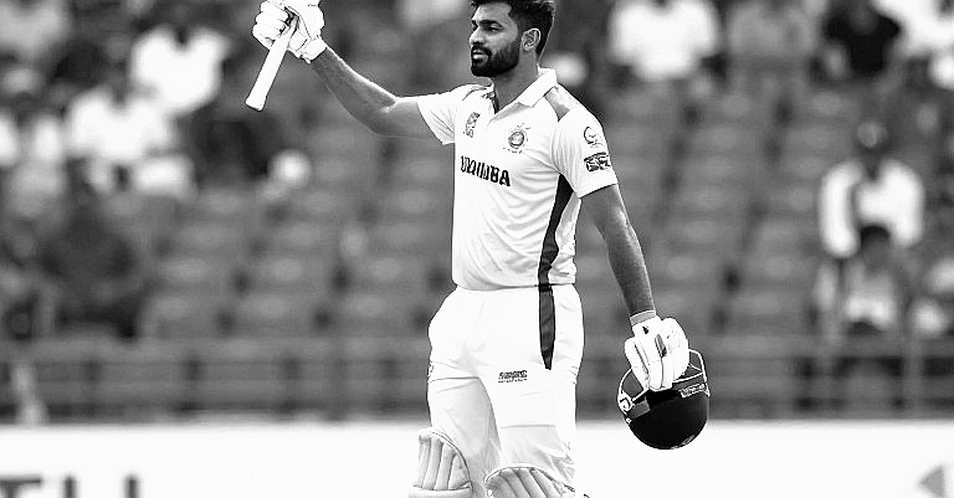
The real trigger is the December date, and the sentence I want to see is "I will play" — with or without a condition attached. The second signal is CSK's first five matches. If the middle order holds without Dhoni, the last two seasons were a composition story rather than a captaincy story. If it does not, the question is not whether Dhoni returns; it is why CSK has not built a single permanent anchor in four seasons. A vintage car's condition can be inspected. The absence of a second car in the garage is not an inspection question — it is a planning question.